The ask
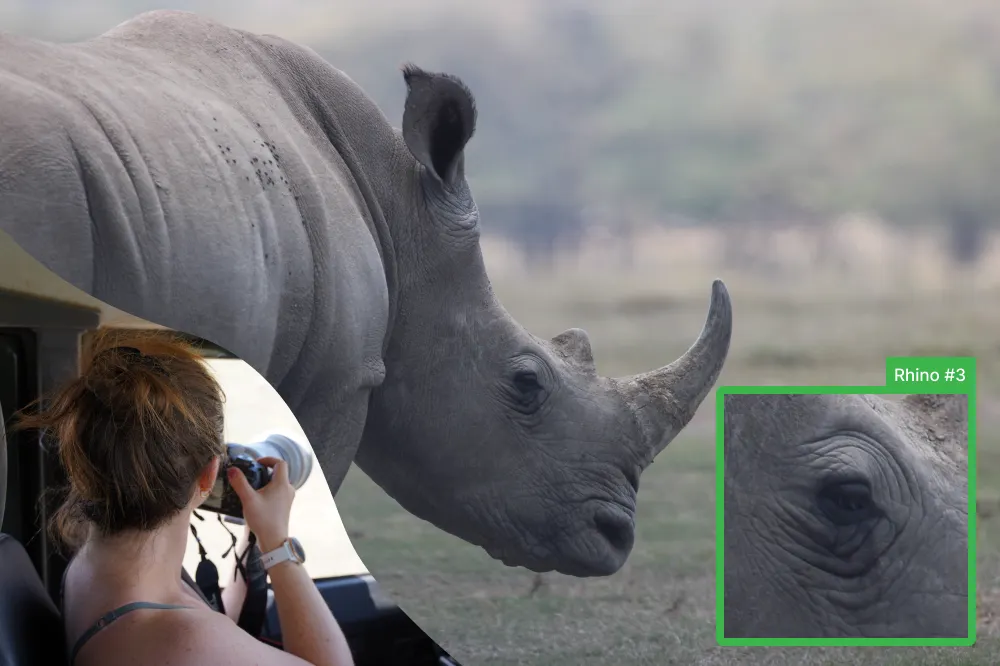
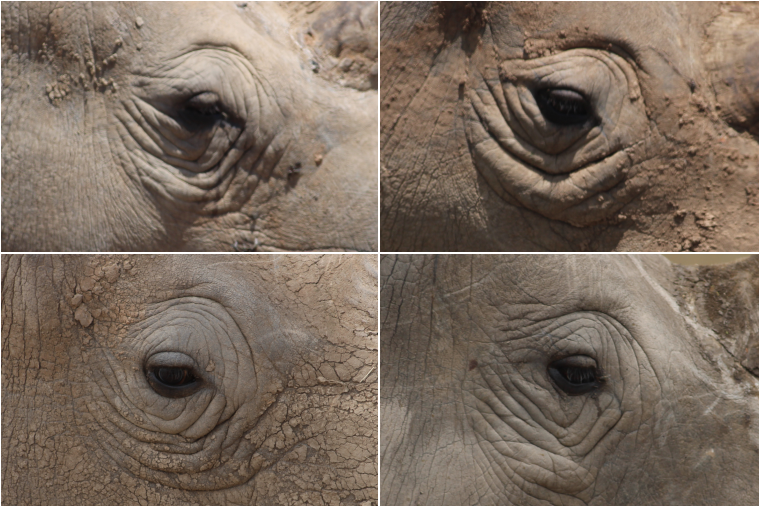
Rhinos have no fingerprints, but they do have eye wrinkles: the pattern around a rhino’s eye is unique per individual and stable over time. The Rhino Monitoring Unit at Solio Game Reserve in Kenya tracked their animals by manually comparing eye photographs across seasons, which is exactly the kind of patient, error-prone work computers should be doing.
With Edge Impulse and the nonprofit Smart Savannahs, we went to Kenya to automate it: build an image-similarity pipeline that identifies an individual rhino from a ranger’s photo.
What I did
- Joined the field expedition: collecting eye photographs from a vehicle, 5 to 30 shots per eye per rhino, which is exactly as bumpy as it sounds
- Built and compared feature-extraction approaches for the matching pipeline: EfficientNet embeddings, HOG and SIFT
- Used similarity search over the embeddings so a new photo returns the closest known individuals, ranked
- Visualized the population with t-SNE so the monitoring team could see clusters and outliers in their own data
How it went
On a pilot of 22 individuals the pipeline put the correct rhino in the top five matches 77% of the time, turning a manual archive-digging session into a shortlist a ranger can verify in seconds. The work supports the behavioral research of the Rhino Monitoring Unit, and Edge Impulse wrote it up as part of their tech-for-good program: read the full story.